Sonhei Escrever um Livro — I Dreamed of Writing a Book

Sonhei escrever um livro. Não sabia o começo, nem o meio, apenas que precisava ser escrito. I dreamed of writing a book. I didn't know the beginning, nor the middle, only that it needed to be written.
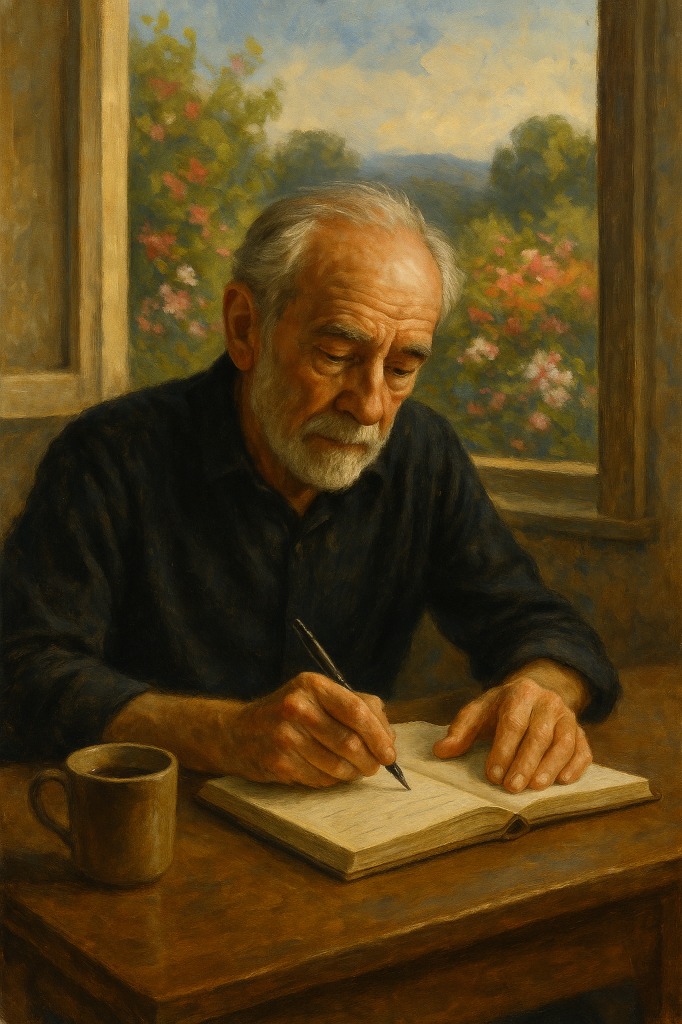
Sonhei Escrever um Livro
I Dreamed of Writing a Book

Sonhei escrever um livro. Não sabia o começo, nem o meio, apenas que precisava ser escrito.
I dreamed of writing a book. I didn't know the beginning, nor the middle, only that it needed to be written.

Sonhei Escrever um Livro

NASCI NO FUTURO, não no meu futuro, mas no futuro do tempo em que deveria ter nascido. Cheguei tarde demais, cheguei quando o mundo começava a esquecer o valor do tempo, do silêncio, da dúvida, e eu ainda não tinha aprendido a falar a língua da pressa. Sempre me senti fora de ritmo, como se a minha história tivesse começado na página errada.

A página em que nasci foi de grandes mudanças, um tempo em que tudo parecia possível. Nessa página, deu-se um pequeno passo para o homem, um salto gigantesco para a humanidade, cantou-se a paz, o amor e a rebeldia, e lutou-se pelo direito de todos serem iguais nas suas diferenças. Não tendo lembrança dessa página senão por ter ouvido falar dela, percebo hoje que as páginas seguintes foram ficando cada vez mais curtas para nelas caber a pressa do mundo, o ruído das gentes, a avidez das sociedades.

MEU AVÔ costumava chamar-me de “menino dos entremeios”. Dizia que eu vivia entre tempos, entre palavras que sequer sabiam se queriam ser ditas. Do alto dos seus mais de 70 anos, o meu avô era um homem que ainda olhava para as nuvens, que olhava o tempo pelas sombras do dia e não pelos ponteiros de um relógio. Foi com ele que aprendi que o silêncio também é uma forma de linguagem, talvez a mais honesta de todas.

Ele era um homem sofrido, mas resistente, marcado por um tempo de pobreza e dor, pela partida de seus filhos para lutar numa guerra que não lhes pertencia, numa terra que desconheciam, e pelo regresso de homens que não mais reconhecia. Nascido na primeira página de um novo século, assistiu a mudanças que, na maioria das vezes, não compreendia. Sofreu a repressão de um regime agressivo e ignorante, capaz apenas de espalhar pobreza e medo sobre um pequeno povo que, em tempos antigos, ousara descobrir o mundo para além do mundo.

A televisão, que chegara à aldeia quando meu avô tinha já mais rugas do que sonhos, mostrava um futuro de máquinas, de vozes sem rosto, de urgências sem sentido. Ele assistia, em silêncio, às imagens que passavam como promessas que nunca o alcançariam. Não se rebelava contra a mudança, mas também não se iludia com ela. Para ele, as verdadeiras conquistas eram invisíveis: um pedaço de terra arado, uma vinha cuidada, uma família reunida ao redor de uma mesa ou um gesto simples num mundo cada vez mais impaciente. Muitas vezes, eu observava-o de longe, sentado à sombra da figueira, o olhar perdido no horizonte.

I WAS BORN IN THE FUTURE, not my own future, but the future of the time in which I should have been born. I arrived too late, when the world was already beginning to forget the value of time, of silence, of doubt, and I had not yet learned to speak the language of urgency. I always felt out of rhythm, as if my story had begun on the wrong page.

The page on which I was born was one of great change, a time when everything seemed possible. On that page, one small step was taken for man, one giant leap for humanity; peace, love, and rebellion were sung, and people fought for the right of all to be equal in their differences. Having no memory of that page beyond what I was told of it, I understand today that the pages that followed grew shorter and shorter to make room in them for the world's haste, the noise of people, the hunger of societies.

MY GRANDFATHER used to call me the “boy of the in-betweens.” He said I lived between times, between words that did not even know whether they wanted to be spoken. Well into his seventies, my grandfather was a man who still looked at the clouds, who read time by the shadows of the day and not by the hands of a clock. It was with him that I learned that silence is also a form of language — perhaps the most honest of all.

He was a man who had suffered, but endured — marked by a time of poverty and pain, by the departure of his sons to fight in a war that was not theirs, on land they did not know, and by the return of men he no longer recognized. Born on the first page of a new century, he witnessed changes he could not, most of the time, understand. He endured the repression of an aggressive and ignorant regime, capable only of spreading poverty and fear over a small people who, in ancient times, had dared to discover the world beyond the world.

The television, which had arrived in the village when my grandfather already had more wrinkles than dreams, showed a future of machines, of faceless voices, of urgencies without meaning. He watched in silence as images passed like promises that would never reach him. He did not rebel against change, but he did not deceive himself either. For him, the true conquests were invisible: a plowed piece of land, a tended vineyard, a family gathered around a table, or a simple gesture in a world growing ever more impatient. Many times, I would watch him from a distance, seated in the shade of the fig tree, his gaze lost on the horizon.

Escrevi este romance experimental, se é que a este conjunto de palavras soltas se pode chamar de romance, num momento da vida em que tinha mais dúvidas do que certezas. O processo foi lento, com muitas hesitações e dilemas. De certa forma, ele reflete o meu gosto pelos livros, uma passion antiga, por vezes esquecida, mas que sempre esteve presente.

As personagens são fictícias, embora algumas possam lembrar pessoas reais. Os acontecimentos descritos também foram inventados, mas alguns podem ter sido inspirados em situações que vivi. A realidade e a imaginação misturam-se naturalmente no processo de escrita.

Os factos históricos foram tratados com o rigor possível. Tenho um grande interesse pela história e tentei ser cuidadoso ao incluí-la neste conto. Ao longo do livro, incluí também referências a obras e autores que me marcaram ao longo dos anos. São homenagens discretas a grandes nomes da literatura que, de alguma forma, moldaram a minha forma de ver o mundo.

Este livro é, acima de tudo, uma forma pessoal de expressão. Foi escrito tarde na vida e, com certeza, não haverá outro. Ainda assim, só por tê-lo escrito, sinto que valeu a pena. Se chegar a alguém e causar algum impacto, mesmo que pequeno, já fico satisfeito.

Este livro é também um pedido de desculpas. No decorrer dos anos, tenho errado com pessoas que importam, às vezes sem perceber, outras vezes por não saber ou não conseguir agir de forma melhor. Escrever foi uma maneira de pensar nesses momentos e, de algum modo, reconhecer essas falhas.

I wrote this experimental novel—if this collection of loose words can be called a novel—at a time in my life when I had more doubts than certainties. The process was slow, with many hesitations and dilemmas. In a way, it reflects my love for books, an old passion, sometimes forgotten, but one that has always been present.

The characters are fictitious, although some may remind you of real people. The events described were also invented, but some might have been inspired by situations I lived through. Reality and imagination blend naturally in the writing process.

Historical facts were treated with as much rigor as possible. I have a great interest in history and tried to be careful when including it in this tale. Throughout the book, I also included references to works and authors that have marked me over the years. They are subtle tributes to great names in literature who, in some way, shaped how I view the world.

This book is, above all, a personal form of expression. It was written late in life, and certainly, there will not be another. Still, simply for having written it, I feel it was worth it. If it reaches someone and makes some impact, however small, I am already satisfied.

This book is also an apology. Over the years, I have made mistakes with people who matter, sometimes without realizing it, other times from not knowing or from being unable to act better. Writing was a way to think about those moments and, somehow, acknowledge those failures.

Marco's RA (Online)
Hi! I'm Marco Vieira's designated Research Assistant. I'm supposed to answer your questions but I really need to finish running this simulation script. What do you need?